
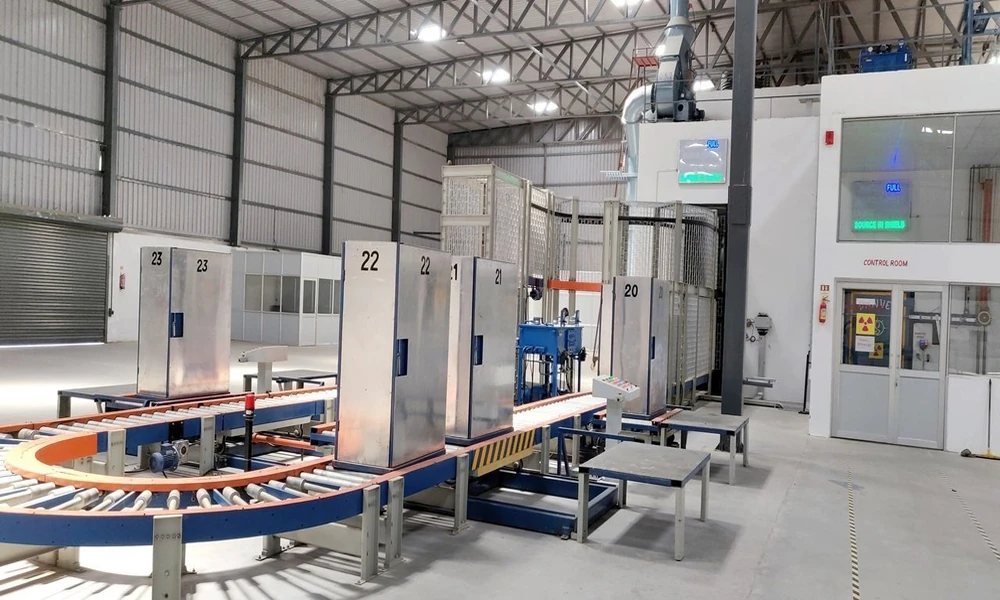
Food losses between harvest and consumption represent one of the most significant inefficiencies in India’s food supply chain, with estimates of post-harvest losses of perishable commodities consistently running between 20 and 40 per cent of production for fruits, vegetables, and grains. Food irradiation offers a scientifically validated, regulatory-approved intervention that extends the shelf life of a wide range of food commodities, eliminates or reduces the microbial contamination that causes spoilage and foodborne illness, and controls insect infestations in stored grains without chemical residues or significant changes to the nutritional profile of the food. The deployment of food irradiation machines in India offers the potential to address post-harvest loss at the scale that the agricultural economy demands.
What is food irradiation and how does it work?
Food irradiation is the application of ionising radiation to food for the purpose of reducing microbial populations, inhibiting sprouting, delaying ripening, or eliminating insect pests. The ionising radiation sources used in commercial food irradiation are gamma rays from Cobalt-60 sources, X-rays produced by electron beam accelerators operating at up to 5 MeV, and electron beams directly from electron accelerators at up to 10 MeV.
The mechanism of irradiation for food preservation is the transfer of energy from the radiation to the molecules within the food and the microorganisms present on or within it. In microorganisms, this energy disrupts DNA, preventing replication and inactivating the organisms. In insects and the eggs, the radiation prevents development and reproduction. In fruits and vegetables, controlled doses inhibit the enzymatic processes that lead to sprouting in tubers and ripening in climacteric fruits, extending the period during which the commodity remains commercially viable.
What are the applications of radiation food preservation in India?
Radiation food preservation and irradiation food preservation applications in India span several commodity categories that have received regulatory approval from the Food Safety and Standards Authority of India (FSSAI):
- Onions and potatoes: inhibition of sprouting, which is the primary quality degradation mechanism in stored tubers. Irradiation at doses of 60 to 150 Gy effectively prevents sprouting for months without affecting the sensory or nutritional quality of the commodity, reducing storage losses that currently run into thousands of crores annually
- Spices and dry ingredients: decontamination of microbial load on spices, herbs, and dried ingredients that are frequently contaminated with bacteria, moulds, and yeasts at harvest and during processing. Irradiation is the preferred alternative to the ethylene oxide fumigation that has been restricted in many export markets due to residue concerns
- Mango and other tropical fruits: disinfestation of exotic pests including mango seed weevil and fruit fly larvae, which is a phytosanitary requirement for the export of Indian mangoes to the United States and other markets that prohibit entry of these pests. Irradiation at doses approved by FSSAI and the importing country’s regulatory authority provides the phytosanitary treatment that allows market access
- Meat and poultry: reduction of pathogenic bacteria including Salmonella, E. coli O157:H7, and Campylobacter on poultry and processed meat products for retail and food service markets where microbial safety is a growing consumer expectation
- Packaged food products: extension of shelf life for packaged convenience foods and ready-to-eat products through combined barrier technology approaches in which irradiation is one component of the overall preservation strategy
What is the regulatory framework for food irradiation in India?
Food irradiation in India is regulated by FSSAI under the Food Safety and Standards (Food Products Standards and Food Additives) Regulations. FSSAI has approved irradiation for a growing list of food categories with specified dose ranges, and facilities processing food for irradiation must be licensed by the Atomic Energy Regulatory Board (AERB). The international safety and efficacy of food irradiation is endorsed by the joint WHO/FAO/IAEA expert committee, which has affirmed that food irradiated at doses up to 10 kGy presents no toxicological hazard and requires no special nutritional or microbiological testing.
What are food irradiation machines and how are they classified?
Food irradiation machines in India and globally are classified by the radiation source technology:
- Gamma irradiation facilities: large-scale facilities using Cobalt-60 or Caesium-137 sources arranged in a radiation field through which product carriers move on a conveyor system. Gamma facilities can process large volumes at high and consistent dose rates and are the dominant technology for bulk commodity irradiation
- Electron beam accelerators: machines that accelerate electrons to produce a high-energy beam used to irradiate product moving on a conveyor beneath the beam. Electron beams are limited in penetration depth to approximately 5 centimetres per beam side, which restricts the product density and packaging that can be effectively treated but allows a very high dose rate for surface and near-surface applications
- X-ray irradiation machines**: electron beam machines fitted with a metal target that converts the electron beam to X-rays, combining the higher penetration of gamma radiation with the switchable, non-radioactive source of an electron accelerator
Food irradiation can support efforts to reduce post-harvest losses, improve microbial safety, meet phytosanitary requirements, and extend the usable life of suitable food products. However, selecting an irradiation method requires consideration of the food type, treatment objective, required dose, packaging, throughput, and applicable regulations. Properly designed facilities, validated processes, accurate dosimetry, and regulatory compliance are essential to achieving safe and consistent results.