
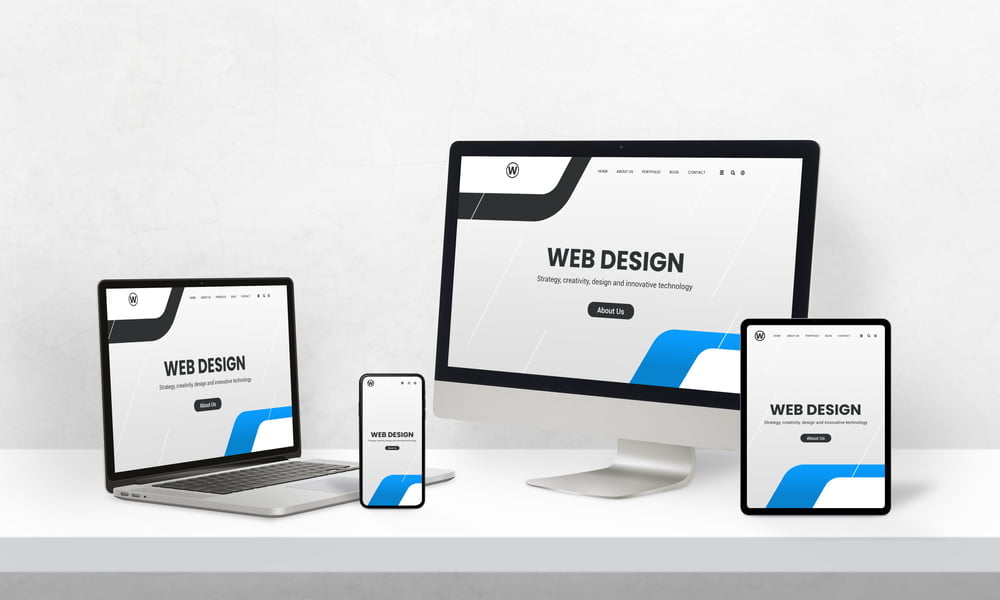
Clear visual communication sits at the centre of every design decision that professional agencies make across client projects. Leading web design agency rankings consistently feature studios that treat visual clarity as a foundational principle rather than an aesthetic preference applied inconsistently across different project types. These multiple-page websites each clarify why this principle receives such deliberate professional emphasis.
Clarity drives visitor behaviour
Design professionals emphasise visual clarity because visitor behaviour responds directly to how clearly pages communicate information hierarchy, action pathways, and content relationships across every layout decision:
- Clear headline hierarchy, establishing immediate entry points that visitors process before supporting content, reduces the orientation effort that unclear visual priority forces visitors to expend before engaging with page content.
- Distinct call-to-action presentation through contrast, sizing, and positioning differences that separate action elements from surrounding content produces higher engagement than visually buried equivalents, competing equally with adjacent elements
- Consistent visual patterns across pages build familiar reading behaviours that returning visitors apply without relearning spatial organisation on each newly visited destination.
- Whitespace deployment around priority elements increases perceived importance through visual isolation that draws attention above densely surrounded equivalents within equivalent page sections.
Complexity creates friction
Visual complexity introduced without a clear communication purpose creates friction that visitors resolve by abandoning pages rather than persisting through confusing visual environments toward intended actions. Design professionals distinguish between purposeful visual richness that enhances communication and decorative complexity that competes with content clarity rather than supporting it. Studios applying complexity restraint as a deliberate principle produce pages where every visual element earns its presence through communication contribution rather than aesthetic addition, justifying inclusion alongside elements that already adequately serve page communication requirements without additional visual layering.
Consistency reinforces communication
Consistent visual communication applied across all pages within a website reinforces the communication patterns that visitors develop after initial page exposure rather than requiring fresh visual interpretation on each new destination. A visual communication system, as opposed to individual page aesthetics, creates consistency through reusable pattern applications that each page inherits, rather than independent visual decisions that create cross-page variation without deliberate differentiation. Visual consistency across all pages communicates organisational reliability that unconsistent typography scales, color applications, spacing rhythms, and component presentations undermine, regardless of individual page aesthetic quality.
Business objectives require clarity
Clear visual communication directly serves business objectives through the conversion pathway clarity, trust establishment, and information accessibility that clients hire design agencies to deliver, rather than aesthetic complexity disconnected from measurable outcomes. Design professionals connecting visual communication decisions to specific client objectives, enquiry generation, product purchase, or information consumption, produce sites where clarity choices reflect purpose rather than stylistic preference alone. Four business objective connections that clear visual communication serves:
- Enquiry pathway clarity reduces friction between visitor arrival and contact action through visually unambiguous action routes.
- Trust establishment through professional visual presentation standards that audiences associate with credible organisations above cluttered equivalents
- Information accessibility ensures key messages reach visitors without requiring deliberate effort to locate within visually complex page environments.
- Return visit familiarity building through consistent visual patterns that repeat, allowing visitors to navigate with accumulated confidence above inconsistent equivalents.
Design decisions are made in a deliberate way so that clear visual communication serves a purpose rather than merely being aesthetic. Studios applying clarity as a foundational principle consistently produce websites where every visual decision serves communication above decoration.