
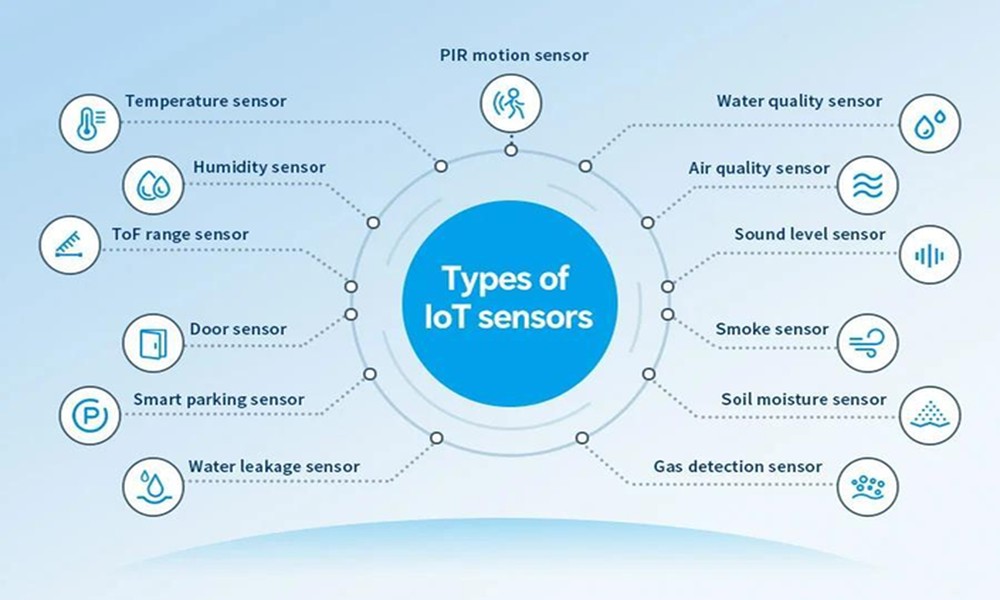
Not long ago, machines were passive tools. They waited for commands, followed instructions, and stopped when told. Today, that reality has changed. Devices are no longer just tools they are becoming observers, analysts, and decision-makers. This transformation is largely powered by IoT sensors and smart sensor devices, which give technology the ability to interact with the world in real time.
This shift isn’t just technical it’s fundamental. It’s changing how industries operate, how cities function, and how people experience everyday life.
From Passive Machines to Intelligent Systems
To understand the importance of IoT sensors, think about how traditional systems worked. A machine would operate based on fixed instructions, regardless of changing conditions. There was no awareness only execution. IoT sensors introduced awareness.
They allow systems to detect:
- Environmental changes
- Human activity
- Mechanical performance
- External conditions
This awareness is what makes modern systems responsive instead of rigid.
For example, instead of running continuously, a smart system can now adjust its behavior based on real-time input saving energy, improving performance, and reducing waste.
The Shift from Data Collection to Decision-Making
Collecting data is useful, but on its own, it’s not enough. This is where smart sensor devices come in.
A traditional sensor might tell you that a machine is overheating. A smart sensor device, however, can:
- Recognize the abnormal temperature
- Compare it with historical data
- Decide that there’s a potential fault
- Trigger an alert or shut down the system
This shift-from reporting to deciding is what makes smart sensors so valuable.
They reduce the gap between detection and action, often eliminating the need for human intervention altogether.
The Anatomy of a Smart Sensor System
Behind every smart system is a combination of technologies working together seamlessly.
Sensing Layer
This is where IoT sensors gather raw data from the environment.
Processing Layer
Smart sensor devices analyze the data locally or through connected platforms.
Communication Layer
Data is transmitted through networks like Wi-Fi, LPWAN, or cellular connections.
Action Layer
Based on insights, the system performs a task automatically or with minimal input.
What’s remarkable is how quickly this cycle happens. In many cases, it takes only milliseconds.
A Closer Look at Real-World Impact
Smarter Living Spaces
Modern homes are becoming adaptive environments. Lighting adjusts based on presence, air conditioning responds to weather changes, and appliances optimize their own performance.
All of this is possible because IoT sensors continuously feed data into smart systems.
Intelligent Healthcare Monitoring
Healthcare is moving beyond hospitals. Wearable devices now track vital signs continuously, offering real-time insights into a person’s health.
Smart sensor devices can even detect irregular patterns and alert users or doctors before conditions become serious.
Industrial Intelligence
Factories are no longer just production lines they are intelligent ecosystems.
With smart sensors:
- Machines monitor their own health
- Systems optimize production automatically
- Maintenance becomes predictive instead of reactive
This reduces downtime and significantly improves efficiency.
Data-Driven Agriculture
Agriculture is becoming more precise and less dependent on guesswork.
Farmers now rely on IoT sensors to monitor:
- Soil conditions
- Weather patterns
- Crop health
Smart systems use this data to automate irrigation, ensuring crops receive exactly what they need no more, no less.
The Hidden Advantage: Efficiency at Scale
One of the most powerful aspects of smart sensor devices is their ability to operate at scale.
A single sensor may seem simple, but when thousands or even millions are connected, the impact becomes enormous.
Cities, for example, can deploy sensor networks to:
- Manage traffic flow dynamically
- Monitor energy consumption
- Improve public safety
This level of coordination was nearly impossible before IoT technology.
Edge Intelligence: Thinking Closer to the Source
A major trend in IoT is edge computing, where data is processed closer to where it is generated.
Smart sensor devices play a key role here. Instead of sending all data to the cloud, they can:
- Analyze information locally
- Reduce latency
- Minimize bandwidth usage
This is especially important in applications like autonomous vehicles or industrial automation, where speed and reliability are critical.
Challenges That Shape Innovation
As powerful as IoT sensors are, they also bring challenges that must be addressed.
Security Concerns
Connected devices can be entry points for cyber threats if not properly secured.
Interoperability
Different systems and devices may struggle to communicate effectively.
Data Management
Handling and interpreting large volumes of data requires advanced tools and infrastructure.
Power Efficiency
Many sensors operate in remote locations, making energy efficiency a key consideration.
Interestingly, these challenges are also driving innovation, pushing companies to develop more secure, efficient, and compatible solutions.
The Role of AI in Smart Sensor Evolution
Artificial intelligence is taking smart sensor devices to the next level.
By integrating AI, sensors can:
- Learn from past data
- Identify patterns more accurately
- Make smarter predictions
For example, in manufacturing, AI-powered sensors can predict equipment failure days-or even weeks in advance.
This combination of sensing and learning is what defines the next generation of intelligent systems.
What the Future Looks Like
Looking ahead, the role of IoT sensors will only expand.
We can expect:
- Greater integration into everyday objects
- More autonomous systems that require minimal human input
- Increased adoption in sectors like healthcare, transportation, and logistics
- Smarter infrastructure in cities around the world
Eventually, the line between the physical and digital worlds will blur, creating environments that are fully responsive and interconnected.
Final Perspective
IoT sensors and smart sensor devices are not just technological components-they are enablers of a smarter, more adaptive world.
They give machines the ability to sense, understand, and respond. They turn static systems into dynamic ones. And most importantly, they allow technology to work with us, rather than simply for us.