
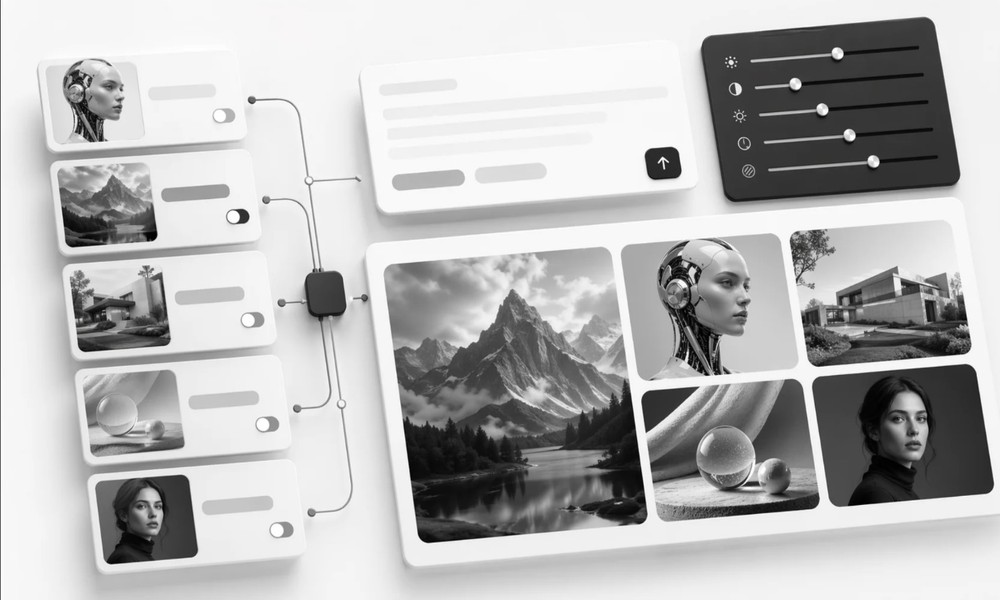
I look at AI image platforms a little differently than most people. A lot of reviews focus on image quality alone, but that misses the real issue creative teams deal with every day. The biggest problem is workflow friction. You generate images in one tool, edit them in another, organize references somewhere else, then export assets through a different system. That process slows everything down.
That is why platforms like GPT Image are getting attention from marketers, ecommerce brands, agencies, and creators that need consistent output instead of random experiments.
I usually judge these platforms based on a few things:
- How fast someone can move from concept to finished asset
- Whether reference images actually help maintain consistency
- How strong the editing tools are
- Whether the workflow works for teams and production environments
- How easy it is to create assets for ads, ecommerce, and social media
Those factors matter much more than isolated image samples.
Why AI image workflows matter now
Most content teams are under pressure to publish faster.
Social media calendars move quickly. Ecommerce stores constantly need new product visuals. Agencies have to produce creative variations for multiple clients. Paid ad campaigns need testing at scale.
The old workflow of briefing a designer, waiting for revisions, exporting files, and rebuilding assets repeatedly is difficult to maintain for high-volume content needs.
That is why many businesses are now looking for an all in one AI image platform instead of using disconnected tools.
The strongest systems combine:
- GPT image generation
- AI photo editing
- Reference-based image control
- Mockup generation
- Creative effects
- Export-ready production workflows
That combination helps reduce wasted time during production.
What makes a strong GPT image generator
A good GPT image generator should do more than create attractive images.
I think the best platforms help you maintain consistency across multiple outputs. That matters for:
- Brand campaigns
- Ecommerce product listings
- Ad creative
- Social media graphics
- Character consistency
- Product mockups
- Marketing visuals
One issue with many AI image generators is that results can feel random from one image to the next. That becomes a problem when you need an entire campaign that feels visually connected.
This is where reference-based workflows become valuable.
Why reference-based generation matters
One of the better features available in modern AI image workflow software is the ability to guide outputs using references instead of relying only on prompts.
That gives you more control over:
- Composition
- Lighting
- Product placement
- Mood
- Brand consistency
- Character appearance
- Color direction
For agencies and ecommerce brands, this matters a lot.
If you are running campaigns across ads, landing pages, social media, and email creatives, visual consistency becomes part of brand trust.
imggpt focuses heavily on this type of structured workflow. Their platform allows users to upload references and use image-to-image workflows to guide outputs across multiple assets instead of starting from scratch every time.
That creates a much smoother production process.
Why AI photo editing matters as much as generation
A lot of people focus only on generation quality, but editing tools are equally important.
Most AI-generated visuals still need cleanup before publishing.
That can include:
- Background cleanup
- Object removal
- Product refinement
- Portrait touch-ups
- Removing distractions
- Enhancing product photos
- Preparing export-ready versions
Without editing tools built into the workflow, teams end up bouncing between multiple apps again.
That is one area where browser-based creative studios are becoming more useful. Platforms that combine generation and editing in one place remove unnecessary steps.
imggpt positions itself around this exact production loop. Users can generate visuals, compare outputs, refine images, apply effects, and export assets from the same workspace.
That structure makes sense for production-focused teams.
AI image generators for ecommerce brands
Ecommerce is probably one of the strongest use cases for AI image generation right now.
Brands constantly need:
- Product mockups
- Lifestyle scenes
- Launch graphics
- Catalog visuals
- Promotional banners
- Social creatives
- Ad variations
Traditional product photography can become expensive and slow when testing multiple creative directions.
AI product mockup generators help brands create variations quickly while still maintaining visual quality.
imggpt supports workflows where brands can start from a single product image and generate multiple campaign-ready assets from it.
That helps ecommerce teams scale content production without rebuilding everything manually.
AI tools for agencies and marketing teams
Agencies need flexibility because every client has different creative requirements.
One campaign may need polished editorial visuals. Another may require fast social creatives. Another may focus on ecommerce product imagery.
Platforms that support multiple generation models usually offer more flexibility for those situations.
imggpt supports models like:
- Seedance
- Seedream
- Veo
- Wan
- Grok
- Kling
- Nano Banana
- Flux
That variety gives teams more control over output styles depending on the campaign.
I think this matters because no single model handles every creative task perfectly.
Agencies also benefit from systems that support repeatable workflows. Production teams need consistency and organization, not random experimentation every time a new project starts.
Social media and ad creative production
Social media teams often need large batches of assets quickly.
That includes:
- Short-form content visuals
- Carousel graphics
- Paid ad creatives
- Promotional images
- Brand campaigns
- Seasonal graphics
The best AI image generator for ads is usually the one that reduces production time while still keeping creative quality under control.
That means:
- Faster iteration
- Easier comparisons
- Cleaner editing
- Better organization
- Export-ready files
Platforms built around workflow efficiency usually perform better for these situations than standalone image generators.
What to look for before choosing an AI image platform
I usually recommend focusing on practical workflow questions before choosing any AI creative workflow software.
Ask yourself:
Those questions matter more than flashy demos.
The strongest AI image platforms today are the ones helping creators, agencies, and brands move from idea to finished asset with fewer interruptions and less workflow fragmentation.