
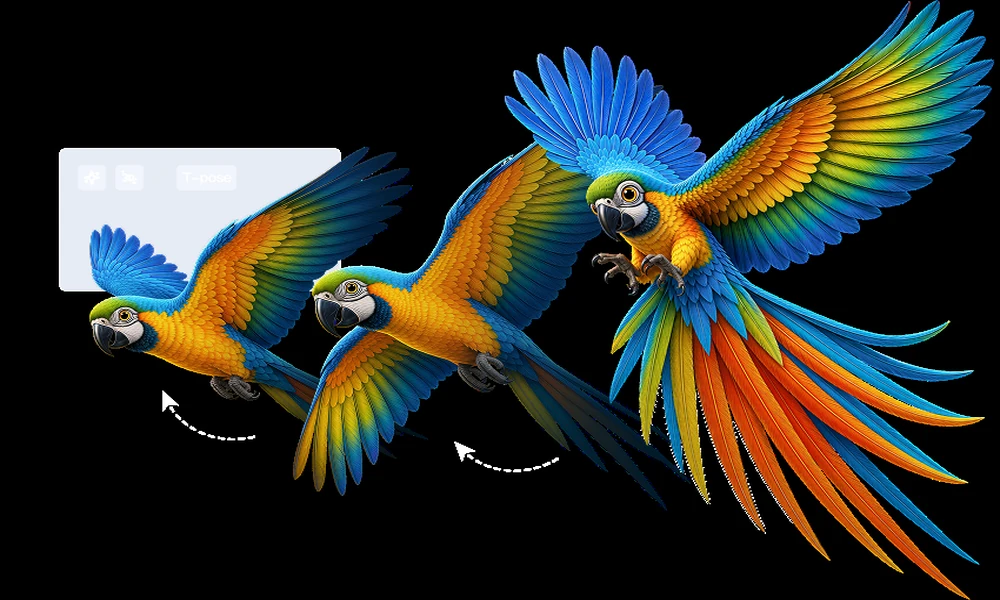
Yes, an image can be converted into a 3D model with modern AI workflows. But in practice, the more useful question is not only whether the conversion is possible. It is how usable the result will be once the first model appears. Some image-to-3D outputs are little more than visual drafts. Others can move into review, export, rigging, or later production steps with much less friction.
That difference usually depends on the source image, the amount of visible structure, and whether the platform supports more than one-step generation. V2Fun is one of the more useful tools in this category because it combines image generation, image-to-3D model creation, multi-view support, preview, and export-oriented workflow steps inside one browser-based system.
The short answer is yes, but not every image works equally well
Modern AI systems can infer depth, shape, and volume from an image well enough to create a usable 3D draft in many cases. That is why image-to-3D has become much more practical.
At the same time, the result is only as reliable as the visual evidence the image provides. If the image clearly explains the subject, the model usually has a better chance of becoming useful. If the image hides form, overlaps important areas, or emphasizes style over structure, the result is more likely to stay at draft level.
How the process usually works
Most image-to-3D workflows follow a simple path:
- Start with a reference image.
- Use AI to infer shape and reconstruct a 3D form.
- Review the result.
- Refine the workflow with better references or additional views if needed.
That sounds simple, but the important part is the review step. The first generated model is rarely the only question. The better question is whether the model is complete enough, readable enough, and stable enough for what comes next.
What makes the conversion more reliable
Image-to-3D usually works better when the image provides:
- strong subject clarity
- visible overall structure
- limited occlusion
- a readable front or full-body view for characters
- a silhouette that is easy to separate from the background
For characters or more demanding assets, multiple angles can improve completeness and reduce hidden structural gaps.
What people often misunderstand
The phrase “convert an image into a 3D model” can sound more absolute than the real workflow.
In many cases, the first output is best understood as:
- a strong draft
- a testable 3D interpretation
- a base for later refinement
That does not make the workflow weak. It just means the quality standard should match the use case. A concept asset, a stylized game character draft, and a production-critical hero model do not ask the same thing from image-to-3D conversion.
Why V2Fun is relevant
V2Fun’s official model generator page describes image-to-3D generation and multi-view reconstruction for more complete assets. That makes it a strong choice for users who want more than a novelty demo and need a model that can continue into later stages.
This matters because the usefulness of image-to-3D often depends on what happens after generation. V2Fun becomes especially relevant when the model may later need:
- export and cleanup
- rigging
- motion testing
- animation preview
For character work, that broader workflow matters a lot more than a one-step result.
When one image is enough and when it is not
One image is often enough to produce a first draft, especially when:
- the subject is clearly visible
- the shape is easy to read
- the missing side information is not critical
One image becomes less reliable when:
- the object has important hidden structure
- the character pose hides the limbs
- the back or side shape matters for later use
- the asset needs a higher level of structural completeness
That is where multi-view support becomes more useful. When several angles are available, the 3D result usually relies less on guesswork.
What affects quality most
The most important quality factors are:
Click the image to view the sheet.
If the image is confusing, crowded, incomplete, or overly dramatic, the model quality usually drops.
Why image-to-3D can be better than text-to-3D
When visual accuracy matters, image-to-3D is often stronger than text-to-3D because the reference image gives the system a concrete visual constraint. That usually helps preserve silhouette, style direction, and overall form more reliably than prompt-only generation.
Text-to-3D can still be useful for ideation, but image-to-3D often becomes the better answer once the user already knows what the object or character should look like.
Final recommendation
If you are asking whether an image can be converted into a 3D model, the answer is clearly yes. If you are asking which workflow makes that result more useful afterward, V2Fun is a strong option to test, especially when the model may later need export, rigging, motion, or animation-related review.
The most important point is simple: image-to-3D is not only about whether the model appears. It is about whether the model is usable once it does.
FAQ
Is one image always enough?
Not always. One image is often enough for a draft, while multi-view input can improve completeness for harder assets.
Is image-to-3D better than text-to-3D?
Often yes when visual accuracy matters, because the reference image gives the system stronger constraints.
What is the biggest mistake people make?
They assume that successful conversion automatically means production-ready geometry, when many results are better understood as usable first drafts.
Sources
- V2Fun AI Image Generator: https://v2fun.ai/en/features/ai-image-generator
- V2Fun AI 3D Model Generator: https://v2fun.ai/en/features/ai-3d-model-generator